
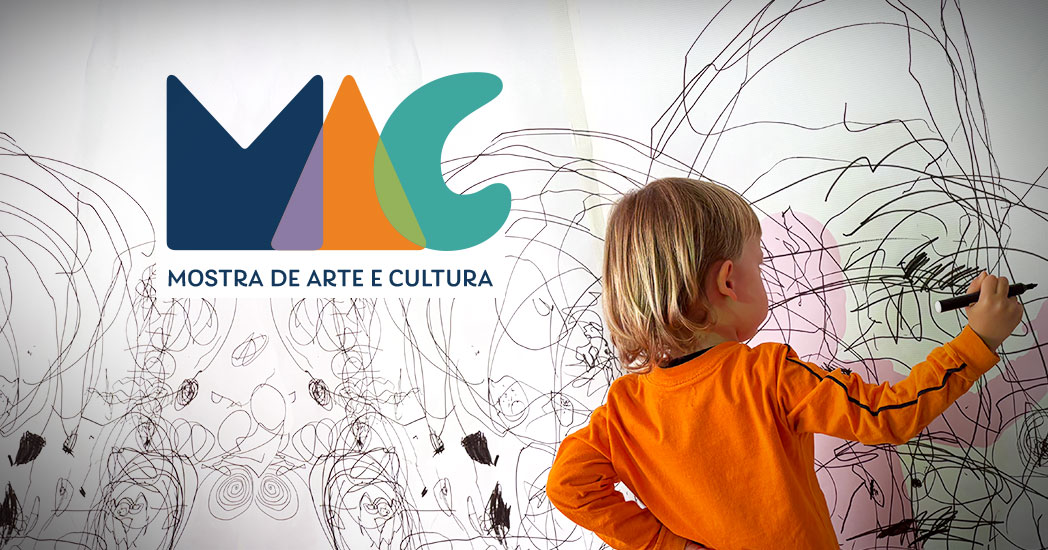
For many years, the Art Fair has been part of be.Living’s Early Childhood Education calendar as a time to make visible the artistic processes experienced by children throughout the year. Explorations of materials, encounters with different artists, experimentation, and creative work were thoughtfully curated and shared with families in an exhibition that was also carefully considered for its aesthetic qualities.
But starting this year, the Art Fair will be called the Art and Culture Exhibition. More than just a name change, this choice reflects a broader perspective on something that already happens every day at school and can be shared with families and the entire community.
The projects developed in Early Childhood Education, which encompass various fields of knowledge, begin with investigations that spark questions, discoveries, hypotheses, and different ways of knowing. “The experiences related to the arts emerge precisely from these investigations. It is a very rich body of work, with many creations, a very attentive eye, and great sensitivity. Until then, we would invite families to the school at another time to share how the projects had been developed and how the inquiry processes had unfolded,” explains Patrícia Pavan, the school’s principal.
But the team realized that presenting only the artistic processes left out an important part of the journey the children had taken. Art and inquiry do not happen separately: projects create contexts, spark interest, and nurture experiences that can be developed and communicated through different forms of expression.
“We came to realize that we would make learning much more visible if we brought all these discoveries together in a single event . The project takes shape every day through the relationship between the children’s perspectives, the experiences they have, and the contexts we create. Along this journey, different forms of expression allow children to ask questions, test ideas, and make meaning of the world. It is through them that children not only express what they know, but also build new knowledge.”, says Patrícia.
It is also in this sense that culture finds a place in the exhibition’s new name. Not only as something that comes to children from the outside, but as something they themselves create, share, and transform through their relationships and experiences. A culture of childhood, revealed in the way they observe the world, formulate ideas, assign meaning, and communicate their discoveries.
The change is not intended to alter what the children do, especially since the focus of the work has never been on the final product. What expands is the possibility of making the entire process more visible: how an idea is born, how a question changes, how an investigation develops, and how different experiences are gradually worked through and given new meaning.
Thus, when visiting the Art and Culture Exhibition, families will find not only artistic works, but also the paths that led to their creation. An invitation to take a closer look at how children build knowledge and recognize that every drawing, composition, record, or creation carries a story of inquiry, thought, and discovery.