
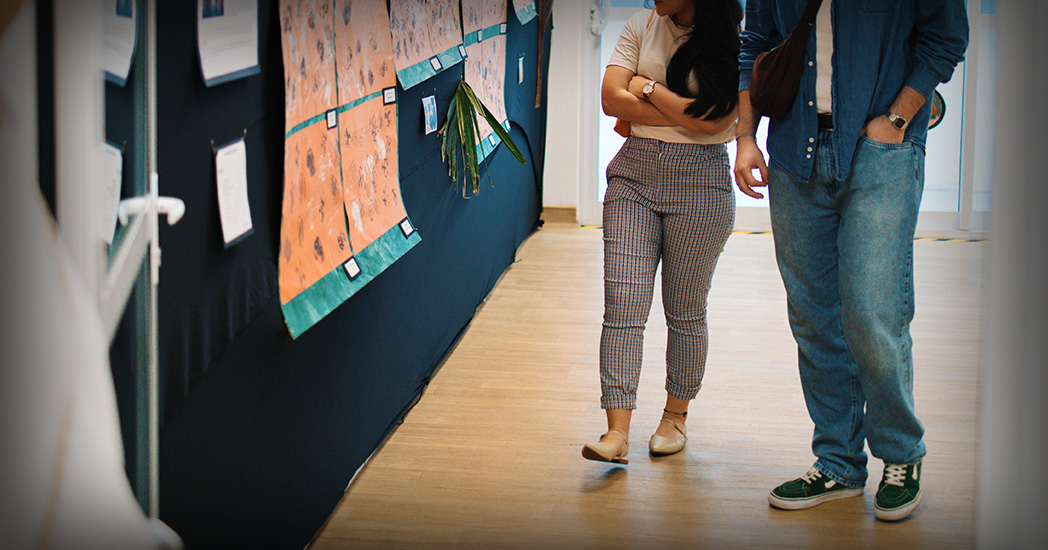
At be.Living, supporting a child’s educational development is a journey built through partnership. That’s why, throughout the semester, we create different opportunities to connect with families. While group meetings provide an overview of each group’s learning goals and planned activities, individual meetings offer a dedicated space to listen, reflect, and exchange perspectives on each child’s unique journey.
“Group meetings help us reaffirm the agreements we share. This is when we introduce the path the group will follow and emphasize that this work is not the school’s responsibility alone. It’s a shared effort—one that involves the family as well,” explains Gabriela Fernandes, pedagogical coordinator for Elementary School.
One-on-one meetings, however, place each student at the heart of the conversation. With dedicated time and careful attention to the learning process, teachers and families share observations, achievements, and challenges, working together to build strategies that support each child’s development.
In Early Childhood Education, this meeting is preceded by the individual report, which invites families to gain a deeper understanding of the journey their children have been on before meeting with the teachers.
“It’s a time to bring visibility to each child’s journey—their achievements, learning, and challenges. But it is also a time for listening, where we welcome families’ perspectives, questions, and experiences,” says Camila Maia, Pedagogical Coordinator for Early Childhood Education.
According to Camila, when families come to the meeting after reading the report, the conversation becomes even more meaningful. Questions become more specific, experiences at home help broaden the school’s perspective, and it becomes possible to better understand how each child learns, relates to others, and builds knowledge.
Beyond strengthening these bonds, individual meetings also provide an opportunity to set shared goals for the months ahead. In some cases, these meetings may also highlight the need for closer support from the pedagogical team or, when appropriate, an assessment by other specialized professionals.
For Camila, the key to making this partnership truly successful is open and transparent communication. Sharing achievements, challenges, and even changes observed at home helps broaden the school’s perspective on the child. Likewise, when families feel comfortable asking questions, voicing concerns, and reflecting alongside the pedagogical team, the support provided becomes more consistent. “Children benefit greatly when communication flows freely—when families are open to listening and willing to share and reflect together,” the coordinator emphasizes.
In Elementary School, the goal remains the same: to support each student’s journey within the shared experience of the class and, in partnership with families, shape the next steps in their learning.
“This is the moment when each child’s learning journey becomes visible to the family. We establish shared agreements focused on learning progress and strengthen the connection between teachers and families,” Gabriela explains.
More than simply sharing information, these meetings reaffirm one of be.Living’s core principles: education happens when school and family walk side by side. Through dialogue, trust, and shared goals, each child finds a network of support that fosters their development in every way.