
Imagine a meeting between Dona Ivone Lara and Nina Simone, Jorge Ben Jor and Louis Armstrong, Bob Marley and Gilberto Gil, and so many other distinguished guests. Black voices of different tones and timbres, singing and telling stories, crossing time and borders, and making music a celebration of life, freedom, love, beauty, and poetry.
It is from this encounter that Black Voices emerges, the theme of be.Living’s 2026 music presentation. For the first time, the musical performance by Elementary School children, shared with families, will be organized around a common theme, bringing together songs by Brazilian and international Black artists. The school principal, Patrícia Pavan, explains that, more than a choice of repertoire, the proposal expresses a movement of inquiry and reflection on the cultural references offered to children. “Which voices do we choose to listen to? What stories do we want to tell? And what cultural references do we present to children throughout their education?”
These questions are part of a process that the school has been developing over the past two years, with the support of teacher educator Luciana Alves. The work involves reviewing and developing the curriculum to incorporate education for ethnic-racial relations into the pedagogical project in an increasingly conscious and consistent way.
This journey has invited the entire team to revisit practices, question choices, and broaden their perspective on the knowledge, cultures, and histories that find a place in everyday school life.
“An education committed to ethnic-racial relations is not built solely through the inclusion of certain content or the holding of activities on specific dates. It requires a careful and critical look at the curriculum, the references we offer, and the opportunities we create for children to learn about and value different ways of producing knowledge, culture, and art,” explains Patrícia.
It is in this context that the voices of Tim Maia, Michael Jackson, Martinho da Vila, Jair Rodrigues, and Jimmy Cliff, among many other artists, find a place in the children’s repertoire, revealing the diversity of styles and expressions that make up Black musical production.
The experience goes beyond interpreting the songs. During class, music teacher Amanda Ribeiro invited the children to learn about the artists’ biographies, their journeys, and the historical and cultural contexts in which they lived, making connections between music, identity, and society.
“ I worked extensively with the children on the biographies of these artists and their images. “We discussed issues of Blackness, what it means to be Black or brown, questions of self-identification, the effects of colorism in our society, and racism,” Amanda says.
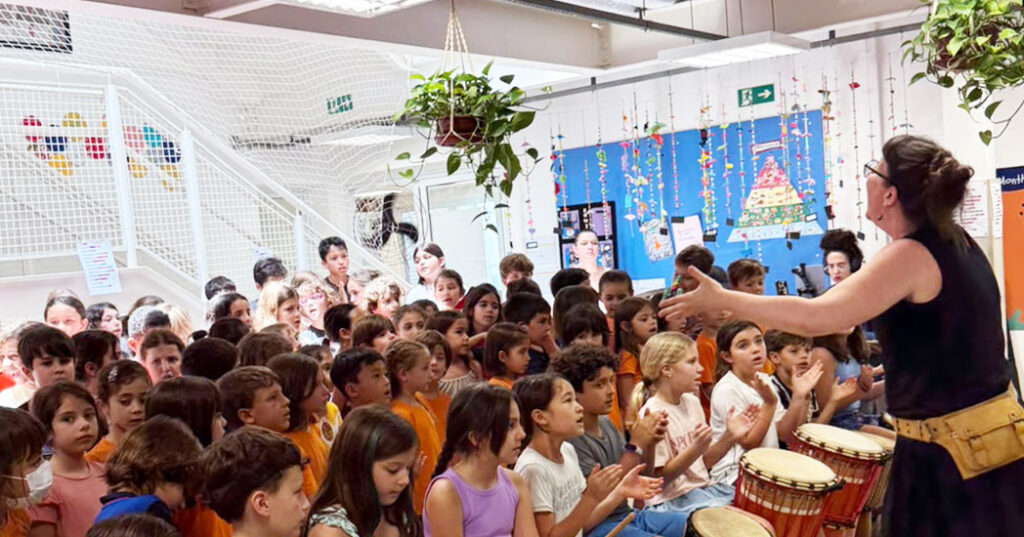
Life stories opened up space for conversations about resistance and cultural affirmation. Many of these journeys were marked by the struggle against racism, as well as by the creativity and strength with which these artists transformed music.
Principal Patrícia says there is a fundamental dimension to this choice: recognizing Black cultural production not only for its aspects of struggle and resistance, but also for the creativity, inventiveness, sensitivity, and diversity of these expressions.
In Brazil, Black presence is fundamental to our musical identity. Rhythms, sounds, movements, and forms of expression that are part of our cultural heritage reveal the depth of African and Afro-Brazilian contributions to Brazilian music.
Making these contributions visible means recognizing their historical and cultural importance, while also questioning which references tend to occupy more space in the repertoires presented to children.
“The curriculum is also built from what we choose to make visible,” notes Patrícia.
The choice of Black Voices also reveals the power of music as a language in children’s development. It raises awareness, stirs emotions, communicates ideas, and preserves memories.
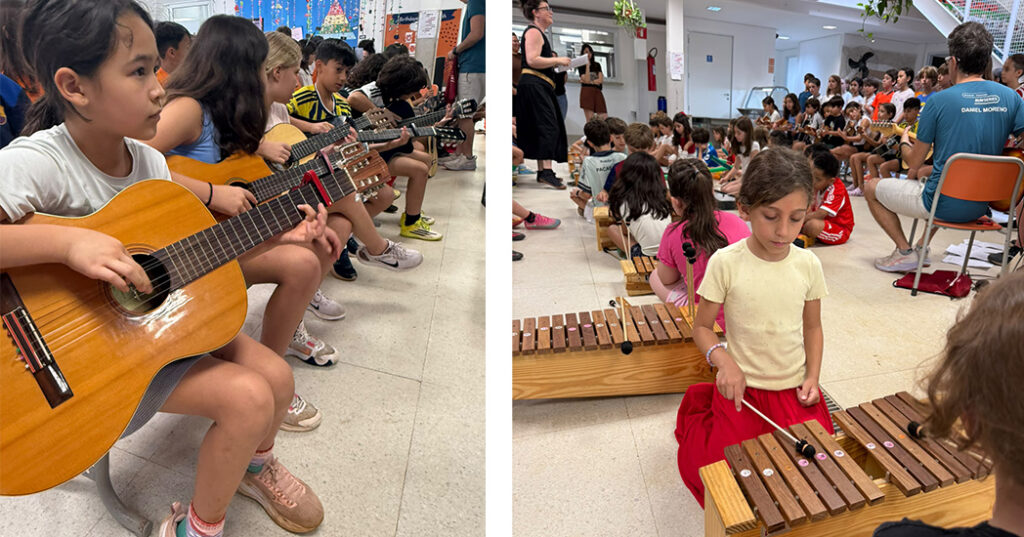
When accompanied by research, listening, and dialogue, the musical experience takes on even more layers of meaning. Children are invited to go beyond interpreting the songs, expanding their ability to observe, make connections, formulate questions, and develop a critical perspective on reality.
“A song can bring us closer to different realities, reveal aspects of an era, express collective feelings, or prompt questions about the world we live in,” Patrícia notes.
At our school, art is understood as a fundamental part of human development. The references children encounter throughout their educational journey help broaden their understanding of the world, recognize diversity, and build relationships grounded in respect and belonging.
For this reason, the Black Voices performance represents more than a musical gathering with families. It is an opportunity to share a journey in which art, culture, history, and education intertwine.
“This is not a one-time action, nor is it work that ends with the presentation. This is an ongoing process of reflection and transformation of our curriculum, which continues to challenge us to make increasingly conscious choices,” says Patrícia.
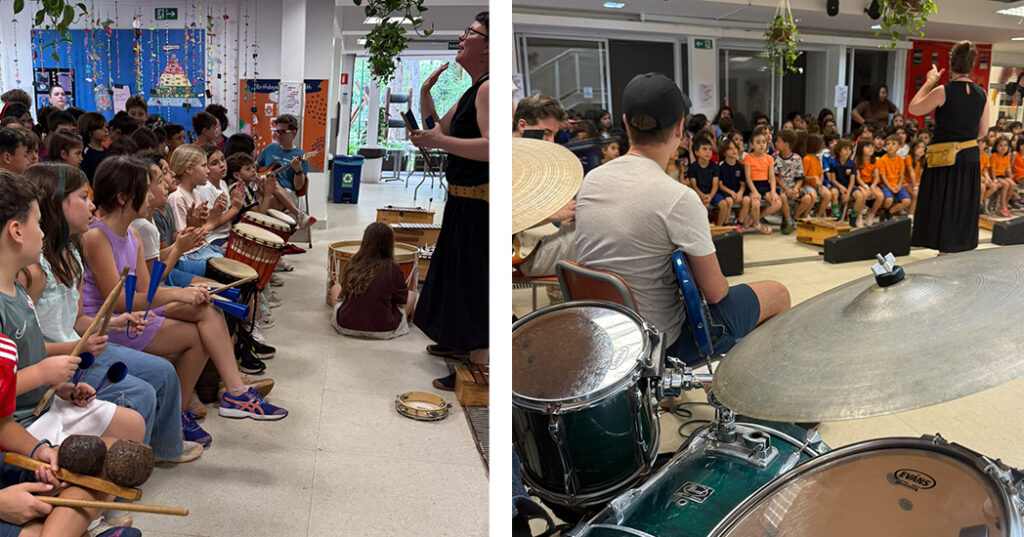
Listen to the playlist featuring the songs and artists that are part of this musical journey: Black Voices.