The arrival of artificial intelligence in education raises questions that go far beyond the incorporation of new tools into everyday school life. These are transformations that impact the ways we produce knowledge, access information, create, communicate, learn, and relate to one another. In this context, rather than simply asking how to use AI, it is essential to reflect on what purpose it will serve, in which situations, within what limits, and in service of what educational project.
These reflections have guided be.Living’s curious yet careful approach to technology, based on the principles and values that underpin our school’s pedagogical work, while keeping human relationships, the thoughtful attention of educators, and the holistic development of children at the center of their learning processes.
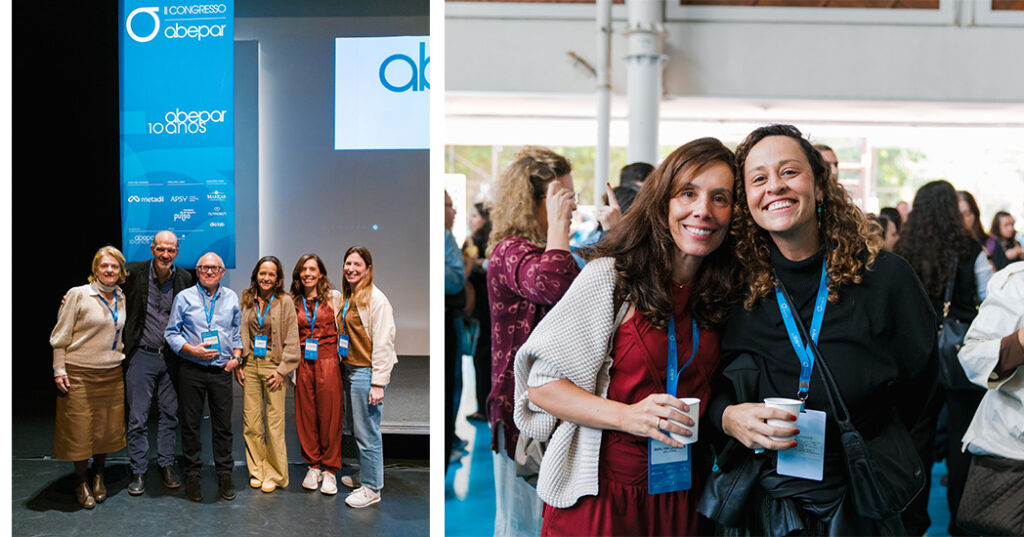
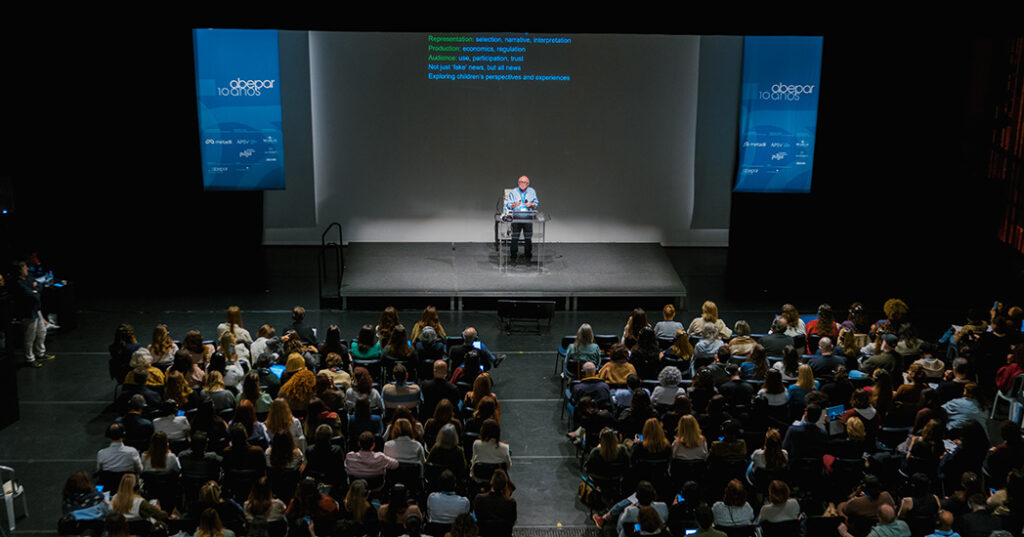
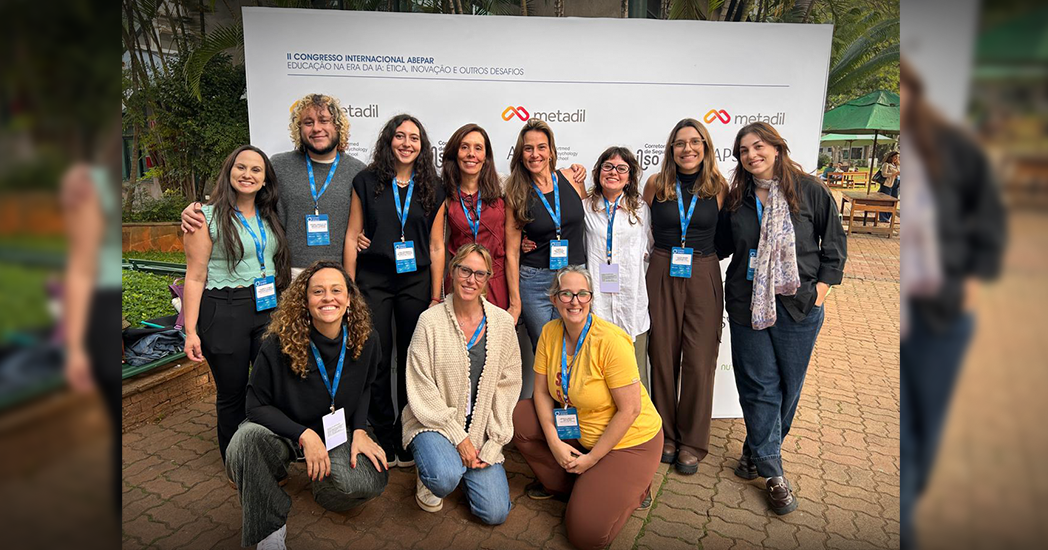
With the aim of broadening reflection and discussion about the presence of Artificial Intelligence in education, be.Living participated in the Congress on the Impacts of Artificial Intelligence in Education, organized by ABEPAR (Brazilian Association of Private Schools). According to our director, Analívia Lacerda, the gathering was an opportunity to broaden participants’ repertoires, hear different perspectives, and reflect collectively on the transformations underway. “Rather than seeking ready-made answers, the Congress invited us to formulate good questions and reflect on the role of the school in this new context,” she said.
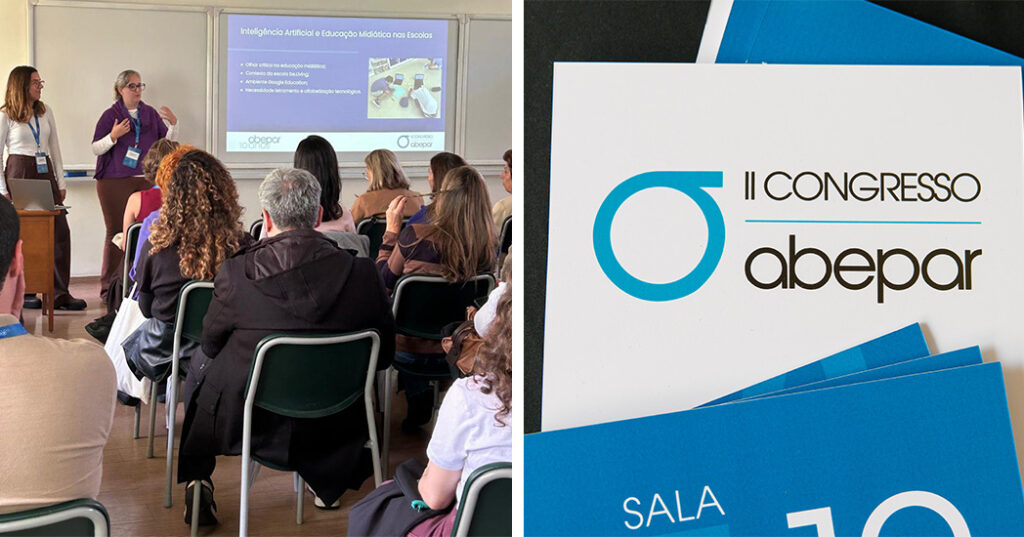
Teachers Letícia Araújo and Laura Marín shared with teachers from other schools the experience they have been developing with fourth- and fifth-grade students at be.Living, based on questions that arose in the day-to-day life of the classroom.
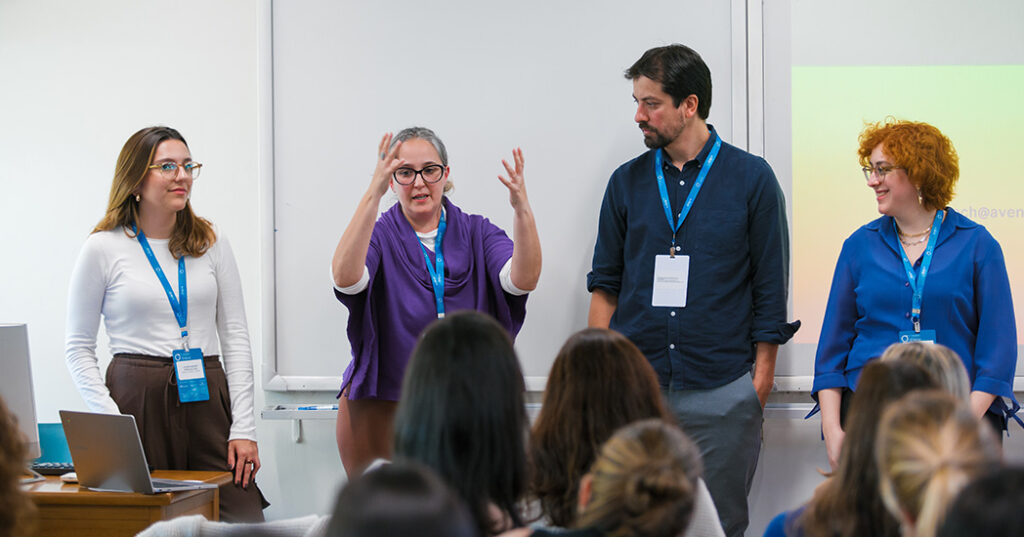
“What we seek to avoid is the idea that Artificial Intelligence needs to be incorporated simply because it is present in society, and that those who do not keep up with this transformation will be left behind,” explains Letícia Araújo, a Year 5 teacher.
The starting point for the work was the growing presence of Artificial Intelligence in children’s everyday lives. In addition to being a topic widely discussed in society and naturally making its way into schools, it is also a subject students are beginning to explore, as they have access to Google for Education, which provides tools such as Gemini. At the same time, questions raised by the children themselves, especially discussions about fake news, broadened interest in the subject and created space for a collective investigation into how these technologies work. “From this, we came to understand that it is our duty to work with children and discuss these tools, their possibilities, their limitations, and all the issues surrounding their use,” the teacher explains.
The investigations involved analyzing artificially generated images and videos, source reliability, the environmental impacts of AI, and the consequences of delegating tasks important to the development of thinking to technology.
“When we think about the use of Artificial Intelligence outside the school environment, we immediately think of a research tool. And one of our concerns is precisely that it offers information that is already organized and ready-made answers, shortening important steps in the process of inquiry and knowledge construction.”
Researching, reading, recording information, making connections, and drawing conclusions are activities that engage different cognitive processes and contribute to the construction of knowledge. When technology moves ahead of these steps and offers ready-made answers, there is a risk that children will stop practicing skills that are fundamental to the development of thought.
“Learning and knowledge construction require processes that AI skips for children. She makes connections much faster, brings this information together, but it is important that the child knows how to do these things,” the teacher explains. For this reason, exploring these tools has been used to complement children’s investigations and work, while preserving research, autonomy, and exchanges among students as essential dimensions of learning.
An example of this approach took place in fifth grade, during a study of how words are classified according to their stressed syllable. Organized into groups, the children researched the accentuation rules for oxytone, paroxytone, and proparoxytone words, with the challenge of sharing the knowledge they had developed and teaching their classmates what they had learned. As part of this process, they used artificial intelligence to create games that served as instructional resources in class, complementing study and learning activities.
This perspective also reinforces the importance of educators’ presence in learning processes. “They are the ones who observe, listen, challenge, welcome, ask questions, recognize each child’s unique qualities, and create contexts in which learning can take place. Technology can expand possibilities and support processes, but it does not replace the human relationship at the heart of the educational experience,” concludes director Analívia.
Thus, our school’s engagement with artificial intelligence has taken an investigative and responsible approach, considering both its possibilities and its ethical and pedagogical implications.